
Time Off Treatment in CLL
“Time-Limited Treatment in CLL: The Holistic Impact of Treatment-Free Periods for the Patient, the Care Partner and the Wider CLL Community” – Advancing European Dialogue on Treatment-Free Periods in CLL
TIME OFF TREATMENT IN CLL
Exploring what high-quality CLL care should look like before, during and after fixed-duration treatment.
For some people living with Chronic Lymphocytic Leukemia (CLL), fixed-duration therapies offer a defined period of treatment followed by time off treatment. These treatment-free periods can bring meaningful changes to everyday life, while also creating new questions about monitoring, psychological wellbeing, communication and long-term support.
The European CLL Association (ECLLA) Time Off Treatment in CLL initiative brings together clinical expertise, patient and care partner experience, psychological perspectives and European policy insights to explore what treatment-free care means beyond clinical outcomes alone.
Beginning with a European multi-stakeholder dialogue in Stockholm in June 2026, the initiative has led to the publication of the European Insight Paper Time Off Treatment in CLL: The ECLLA European Holistic Framework, accompanied by the Voices on CLL Care educational video series.
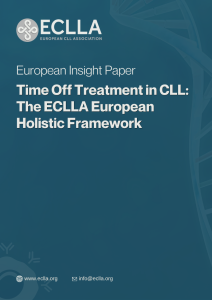 NEW | EUROPEAN INSIGHT PAPER 2026
Time Off Treatment in CLL: The ECLLA European Holistic Framework
A European perspective on clinical care, quality of life, psychological wellbeing, survivorship and equity during treatment-free periods in CLL.
This European Insight Paper, developed by the European CLL Association (ECLLA), explores treatment-free care in chronic lymphocytic leukemia (CLL) from a holistic perspective. It brings together published evidence, international patient experience data, and insights from the ECLLA Multi-Stakeholder Panel Discussion to inform practical recommendations through the ECLLA European Holistic Framework.
The Framework highlights the importance of combining clinical excellence with shared decision-making, psychological wellbeing, survivorship, care partner support, and equitable access to care across Europe, while integrating patient perspectives throughout.
The publication is intended to support healthcare professionals, patient organisations, researchers, policymakers, care partners, and other stakeholders working to improve treatment-free care in CLL.
Developed by ECLLA with support from AbbVie through an educational grant, ECLLA retained full editorial responsibility. To our knowledge, this is the first European multi-stakeholder insight paper to explore treatment-free care in CLL from a holistic perspective.
Treatment-Free Care Is Not the Absence of Care
Treatment completion marks a change in the phase of care, not an end to care. People living with CLL continue to need appropriate monitoring, clear information, communication and support throughout treatment-free periods.
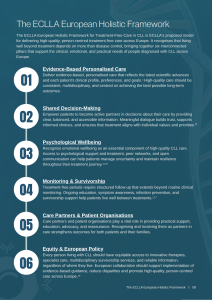 The ECLLA European Holistic Framework
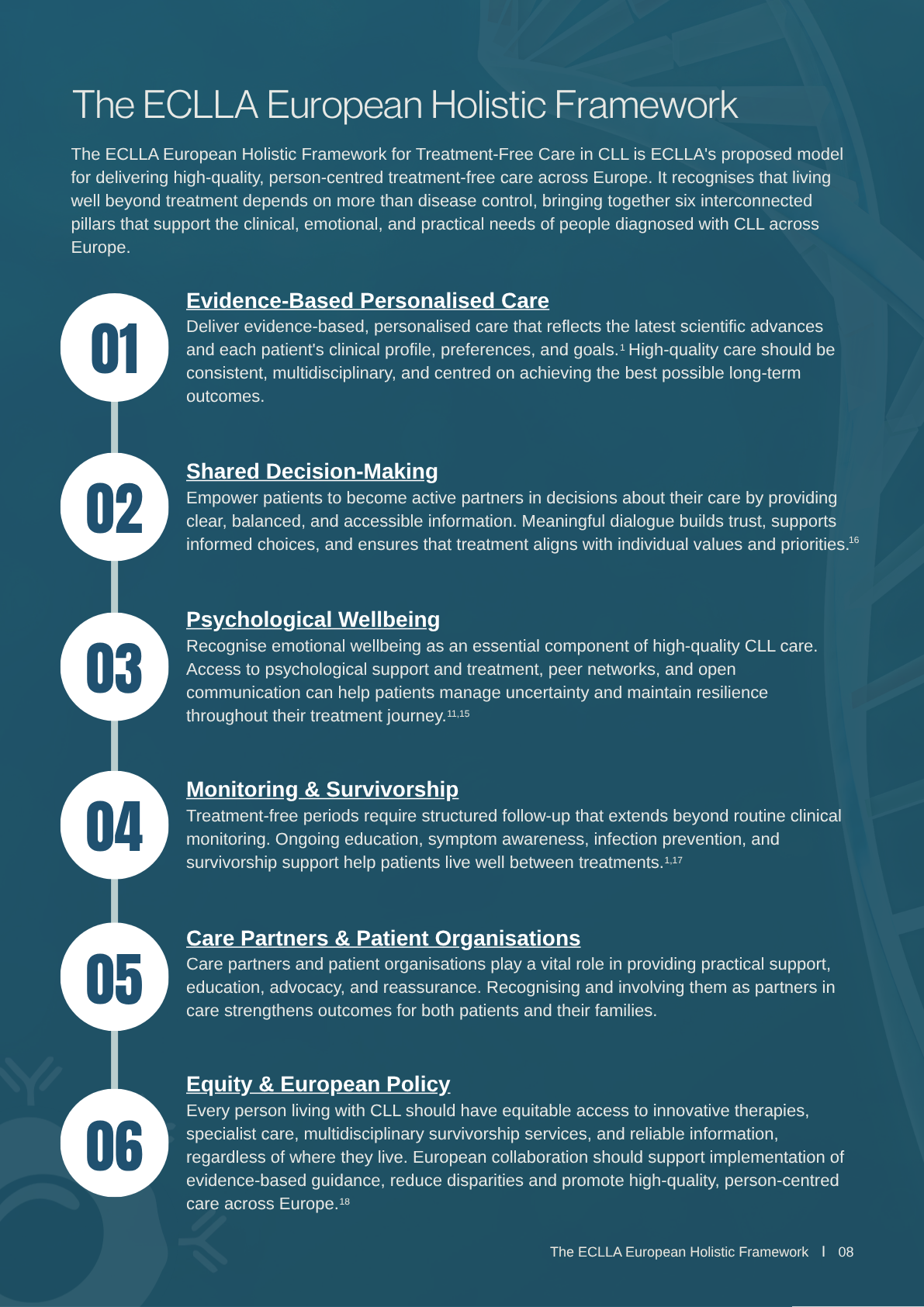
The Framework brings together six interconnected pillars that reflect the wider needs of people living with CLL during and beyond treatment:
Evidence-Based Personalised Care
Shared Decision-Making
Psychological Wellbeing
Monitoring & Survivorship
Care Partners & Patient Organisations
Equity & European Policy
Together, these pillars provide a holistic approach to treatment-free care that combines clinical excellence with the priorities and lived experiences of people affected by CLL.
The future of CLL care is not defined solely by longer survival. It is defined by how well people live during and beyond treatment.
Voices on CLL Care
The accompanying Voices on CLL Care educational video series brings the themes of the Insight Paper to life through expert and lived-experience perspectives. The interviews explore treatment choice, quality of life, psychological wellbeing, shared decision-making, monitoring, care partner experiences and inequalities in CLL care across Europe.
Where the Project Began
The initiative began with ECLLA’s Multi-Stakeholder Panel, “Time Off Treatment in CLL: Clinical Control and Patient Priorities in Fixed-Duration Treatment,” held in Stockholm in June 2026. The discussion brought together clinical, patient, care partner, psychological and policy perspectives and informed the Insight Paper and interview series.
Moderated by Denis Costello, Director of CML Advocates Network, the panel featured contributions from:
- Dr Talha Munir, Leeds Teaching Hospitals NHS Trust
- Dr Kostas Stamatopoulos, Institute of Applied Biosciences, CERTH
- Prof Amanda Kracen, National College of Ireland
- Eugene Beirne, St James’s Hospital Dublin
- Monica Racovita, Myeloma Patients Europe
- Felice Bombaci, Patient Advocate and CLL Care Partner
- Jan Rynne, European CLL Association (ECLLA)
The discussion explored the clinical, emotional, and practical realities of treatment-free periods in CLL, including quality of life, psychological wellbeing, monitoring, communication, shared decision-making, and long-term survivorship.
Strong Participation Across Europe
The event attracted broad participation from across the European CLL community. A total of 32 participants attended the session in person in Stockholm, while a further 26 participants joined virtually from 13 European countries, representing predominantly patient advocacy organisations and ECLLA member groups. The hybrid format enabled meaningful engagement from across Europe and ensured that the voices of people living with CLL remained central to the discussion.
Key Themes and Insights
Several important themes emerged during the discussion:
- The benefits of treatment-free periods extend beyond clinical outcomes and should also be evaluated through the lenses of quality of life, psychological wellbeing, communication, monitoring, and shared decision-making.
- Patients require clearer information and better support when transitioning into treatment-free periods.
- Emotional wellbeing and fear of relapse remain important considerations, even when treatment outcomes are positive.
- Nurses, care partners, and patient organisations play a critical role in supporting patients throughout monitoring and survivorship phases.
- A more holistic approach to CLL care is needed, integrating clinical effectiveness with patient experience and long-term quality of life.
From Dialogue to Action
Stockholm Multi-Stakeholder Dialogue → European Insight Paper → Voices on CLL Care → Continuing European Dialogue.
The ECLLA European Holistic Framework provides a foundation for continued discussion on patient-centred CLL care, shared decision-making, psychological wellbeing, monitoring and survivorship, and equitable access across Europe.
Acknowledgements
ECLLA would like to sincerely thank all panellists, attendees, patient advocates, healthcare professionals, care partners, and partner organisations who contributed to this important discussion and helped strengthen European dialogue on the future of CLL care.
This initiative is supported by: 
Voices on CLL Care
The interview series brings together expert and lived-experience perspectives on the clinical, psychological, practical and policy themes explored through the project.
ECLLA Stockholm Panel
ECLLA Stockholm Panel Gallery


Read the Panel Summary Report
A summary of the panel discussion is available here: